
If you’re taking semaglutide, you may be wondering what you’re actually supposed to eat. Should you cut carbs? Eat more protein? Make your meals smaller? Follow a specific semaglutide diet plan?
Good news: There isn’t one diet everyone needs to follow.
Semaglutide can reduce your appetite and help you feel full sooner, which often means eating smaller portions. When you’re eating less, what you choose to eat is even more important.
Why Does Nutrition Matter When You’re Eating Less?
Semaglutide can reduce appetite and slow digestion, so you may feel satisfied with less food than you did before treatment.
But eating less isn’t the same as eating well.
Even with a smaller appetite, your body still needs adequate nutrition for energy, muscle, and overall health. Try to eat as few calories as possible and your body won’t be receiving the nutrients it needs.
If your appetite becomes so low that you’re struggling to eat or drink normally, or side effects are regularly getting in the way of meals, talk with your provider.
Make Protein a Priority
Protein is especially important during weight loss because it helps support lean muscle. Research has found that adequate protein intake, particularly when combined with physical activity, can help support the preservation of muscle during weight loss.
Good protein sources can include:
- Chicken or turkey
- Fish
- Eggs
- Greek yogurt or cottage cheese
- Beans and lentils
- Tofu and other plant-based proteins
Aim to include a source of protein with your meals, while keeping your individual appetite and tolerance in mind.
There’s no single protein target that’s right for everyone. Your needs depend on your health, activity level, body composition, and treatment plan, so your provider can help you decide what makes sense for you.
Add Fruits, Vegetables, and Fiber-Rich Foods
Fruits and vegetables provide important vitamins and minerals, while foods such as whole grains, beans, fruits, and vegetables can also add fiber to your diet. The National Institute of Diabetes and Digestive and Kidney Diseases recommends a balanced eating pattern that includes vegetables, whole fruits, whole grains, and a variety of protein sources
Some options include:
- Leafy greens and other vegetables
- Berries and whole fruits
- Beans and lentils
- Oatmeal
- Brown rice and other whole grains
If you haven’t been eating much fiber, increase your intake of it slowly. Because semaglutide slows how quickly food leaves the stomach, suddenly increasing your fiber intake may be uncomfortable for some people. Add fiber gradually and pay attention to how your body responds.

You Don’t Have to Cut Out Carbs or Fats
You don’t need to eliminate carbohydrates or fats just because you’re trying to lose weight.
For carbohydrates, look for options that also provide useful nutrients and fiber, such as:
- Oatmeal
- Brown rice or quinoa
- Potatoes or sweet potatoes
- Whole-grain breads or wraps
Sources of unsaturated fats can include avocado, nuts, seeds, nut butters, and olive oil.
Some people find that very rich, greasy, or high-fat meals feel heavier while taking semaglutide. That doesn’t mean all fats need to come off the menu. Portion size and your own tolerance matter.
What Should a Semaglutide Meal Actually Look Like?
As you adapt to semaglutide, these changes will start to become habit. In the meantime, it can be helpful to use the following formula:
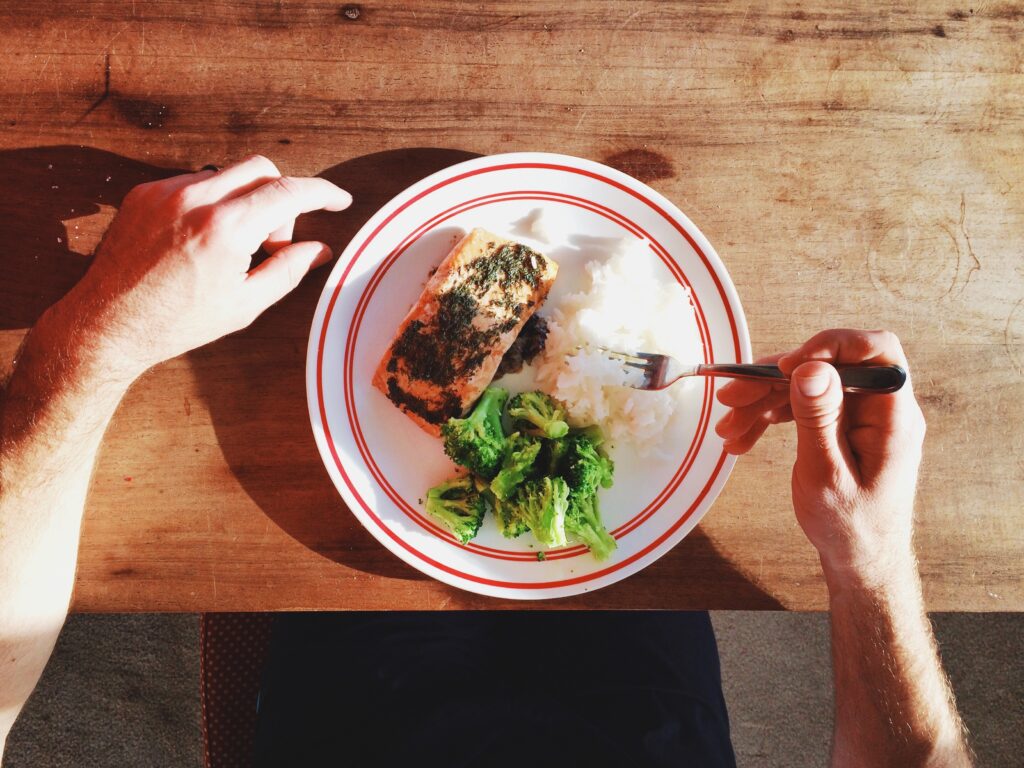
Protein + produce + nutrient-dense carbohydrate + source of unsaturated fat
For example, breakfast might include eggs with whole-grain toast and berries, or Greek yogurt with fruit, oats, and nuts.
For lunch or dinner, you could have grilled chicken with vegetables and brown rice, salmon with roasted vegetables and a small potato, or a grain bowl with beans, vegetables, and avocado.
Your portions may be smaller than they were before starting semaglutide. Pay attention to when you feel satisfied rather than pushing yourself to finish what’s on your plate.
Do You Need Snacks on Semaglutide?
Not everyone does.
If your meals keep you satisfied and you’re getting adequate nutrition, you may not feel the need to snack. Other people may find a snack helpful, particularly if they’re eating smaller meals or have a more active day.
If you’re hungry between meals, options that combine protein and fiber include:
- Greek yogurt with fruit
- Fruit with nut butter
- Vegetables with hummus
- Cottage cheese with fruit
- A small handful of nuts
There’s no need to eat on a rigid schedule simply because you’re taking semaglutide. Your appetite and nutritional needs should help guide when and how often you eat.
Hydration Matters, Too
It can be easy to focus on food and forget about fluids.
Staying hydrated is important during semaglutide treatment, especially if you experience gastrointestinal side effects such as nausea, vomiting, or diarrhea.
Try to drink fluids throughout the day rather than waiting until you’re very thirsty or drinking a large amount all at once. There isn’t one hydration target that works for everyone. Your activity level, environment, diet, health, and medical needs can all affect how much fluid you need.
If you find it difficult to drink enough water during the day, remember that any beverage (except for alcohol) can provide hydration. Just watch out for extra calories in sugary drinks like soda and juice.

What Foods Can Be Harder to Tolerate?
There isn’t a universal list of foods you have to avoid on semaglutide.
That said, some people notice more nausea, bloating, or uncomfortable fullness after certain meals. Foods and eating patterns that may be harder to tolerate include:
- Large meals
- Fried or greasy foods
- Very rich or high-fat meals
Pay attention to how you feel after eating. If the same food or portion size repeatedly leaves you uncomfortable, you may want to adjust it. You can also learn more about foods that may be harder to tolerate while taking semaglutide.
Think Beyond a Temporary “Semaglutide Diet”
The goal isn’t just deciding what to eat while you’re taking semaglutide. It’s building eating and lifestyle habits that can continue to support your health as your treatment and needs change.
That might mean eating more nutrient-dense foods, including protein regularly, staying hydrated, remaining physically active when appropriate, and paying more attention to hunger and fullness.
Those habits don’t have to look exactly the same throughout treatment. Your appetite and nutritional needs may change as you lose weight, and your approach can change with them.
Rather than trying to follow a perfect diet, focus on finding a way of eating that supports your health and is realistic enough to maintain. That same personalized approach is an important part of medical weight loss, where treatment can be monitored and adjusted as your body responds.
There’s No One Perfect Semaglutide Diet
So, what should you eat on semaglutide?
Focus on balanced, nutrient-dense foods that provide the nutrition you need while working with your appetite and digestion. What that looks like will vary based on your health, preferences, side effects, and response to treatment.
At Oviedo Med Spa, semaglutide treatment is medically supervised and personalized to each patient. If you’re considering semaglutide or have questions about your current weight loss plan, schedule a consultation with our medical team to discuss your goals and determine what approach may be appropriate for you.